

“This post includes affiliate links, which help support my site! If you decide to purchase something after clicking one, I’ll receive a commission, but the price you pay stays exactly the same. Thanks so much for reading and supporting the blog!”
Unleashing Productivity: A Comprehensive Guide to Mastering Notion for Project Management and Beyond
Table of Contents
ToggleIntroduction
In the ever-evolving landscape of digital tools, finding the perfect application to streamline your workflow can be a challenge. Enter Notion for project management , a powerhouse of versatility and functionality that has captured the attention of productivity enthusiasts worldwide. Whether you’re looking for an all-in-one workspace, a note-taking tool, or a robust project management solution, Notion has something to offer. In this review, we’ll explore the ins and outs of Notion for project management, examining its features, strengths, and areas for improvement. By the end, you’ll have a clear understanding of whether Notion is the right tool for you.
Notion for project management is more than just another productivity app; it’s a flexible, all-encompassing platform that combines elements of note-taking, project management, and database creation into a single, cohesive experience. But with great flexibility comes great responsibility—or at least a bit of a learning curve. Fear not, as we’ll guide you through the essential features and tips for making the most out of this powerful tool. So grab your favorite beverage, sit back, and let’s dive into the world of Notion!

Overview of Notion for Project Management
Notion for project management is like having a Swiss Army knife for your digital workspace. It’s a versatile tool that combines the best features of note-taking apps, databases, task managers, and more, all within a single, unified interface. The beauty of Notion lies in its adaptability. You can tailor it to fit any workflow, whether you’re managing a personal project, coordinating a team, or organizing your entire life. The platform’s flexibility makes it stand out from the crowd, allowing users to build customized systems that suit their unique needs.
At its core, Notion for project management functions as a highly customizable workspace. It uses a block-based system where each piece of content, whether it’s text, an image, a table, or a to-do list, is a “block” that can be rearranged, styled, and connected to other blocks. This modular approach makes Notion incredibly adaptable, enabling users to create anything from simple to-do lists to complex databases.
Notion’s appeal isn’t just in its functionality, but also in its aesthetic appeal. The clean, minimalist design provides a distraction-free environment that encourages focus and productivity. Plus, with features like dark mode and custom icons, you can personalize your workspace to match your style. In essence, Notion isn’t just a tool; it’s a canvas for your creativity.
User Interface and Design
One of the first things you’ll notice about Notion for project management is its sleek and modern user interface. Unlike some other project management tools that can feel cluttered and overwhelming, Notion for project management offers a clean, minimalist design that is both aesthetically pleasing and functional. The interface is intuitive, making it easy for new users to get started, while also providing advanced features for power users.
The left sidebar is your main navigation hub, where you can access your pages, databases, and templates. The top menu bar offers quick access to key functions like adding a new page, searching your workspace, and accessing settings. The central workspace is where all the magic happens, and this is where Notion’s block-based system really shines. You can drag and drop blocks to rearrange content, nest blocks within each other, and use various formatting options to customize your pages.
Notion for project management ‘s design isn’t just about looks; it’s about functionality. The responsive design means that Notion works seamlessly across different devices, including desktops, tablets, and smartphones. This cross-platform capability is a game-changer, allowing you to access your workspace from anywhere. Whether you’re at your desk or on the go, Notion is always at your fingertips.
Versatility and Customization
If there’s one word to describe Notion for project management, it’s “versatile.” The platform is incredibly adaptable, making it suitable for a wide range of use cases. Whether you’re a student managing your coursework, a professional organizing projects, or a creative keeping track of ideas, Notion can be tailored to fit your needs.
The customization options are virtually limitless. You can create pages, databases, kanban boards, calendars, and more. Each page can be customized with different blocks, including text, images, videos, code snippets, and even embedded content from other sites. This flexibility allows you to create a workspace that not only meets your functional needs but also reflects your personal style.
One of the standout features of Notion for project management is its template gallery. The gallery includes a wide range of templates for different use cases, from personal journals to project management dashboards. These templates can be used as-is or customized to suit your needs. The ability to create and share custom templates is a huge time-saver and helps maintain consistency across teams and projects.

Key Features of Notion
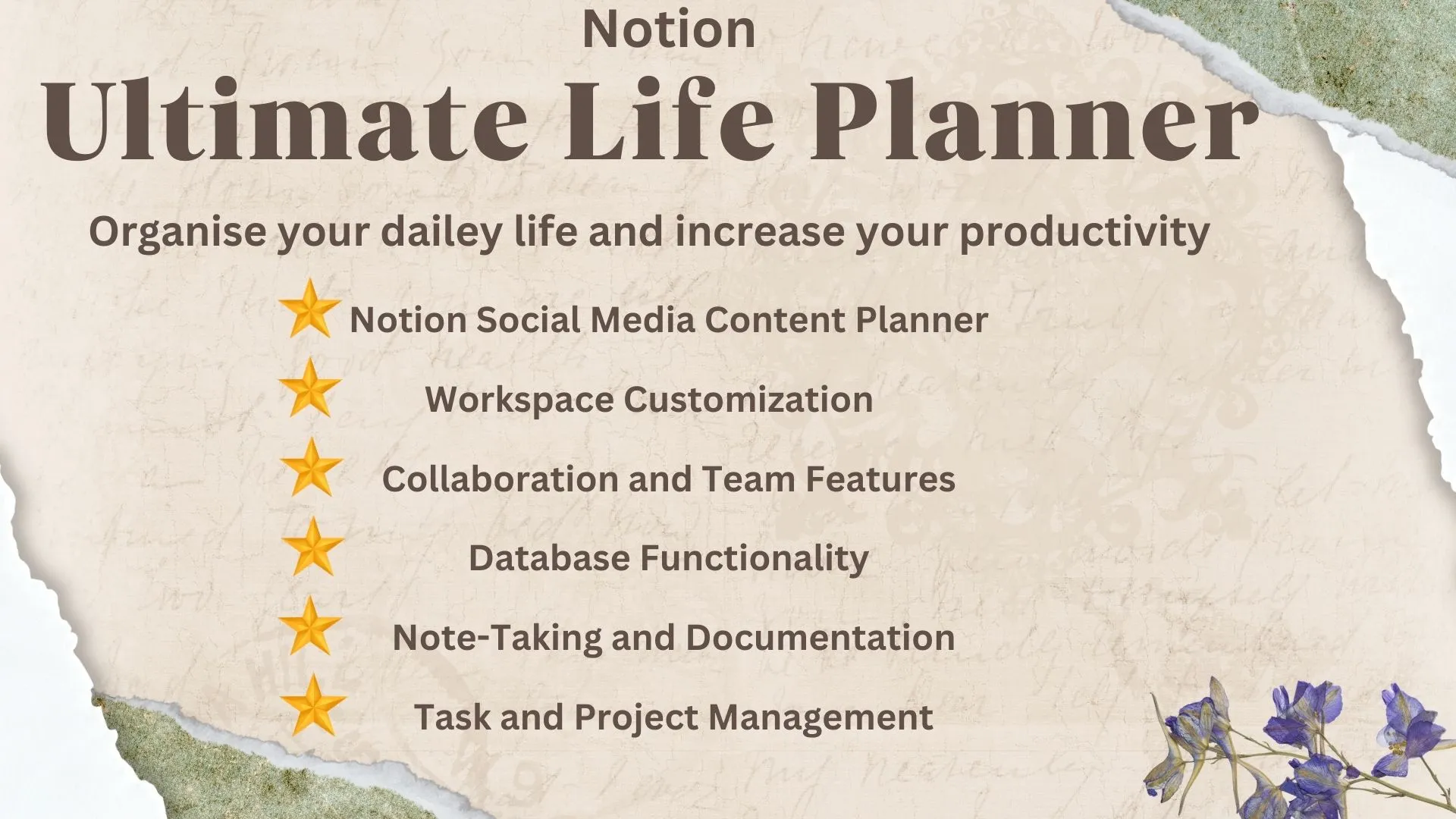
Notion’s feature set is extensive, but a few key features stand out as particularly useful:
Databases and Views
Notion’s database feature is a game-changer for anyone who needs to organize information. You can create databases for anything—tasks, projects, recipes, books, you name it. The real power of Notion’s databases lies in its various views. You can switch between table, board, calendar, list, and gallery views, depending on how you want to organize and visualize your data. This flexibility makes it easy to find the right format for any type of information.
Collaboration and Sharing
Notion for project management is not just a solo tool; it’s designed for collaboration. You can share pages and databases with team members, assign tasks, leave comments, and even mention people to get their attention. The real-time collaboration feature means you can work on the same page simultaneously with others, making it an excellent choice for team projects. Notion also offers granular permissions, allowing you to control who can view, comment, and edit your content.
Integration with Other Tools
While Notion for project management is a robust tool on its own, its ability to integrate with other apps enhances its functionality. You can embed content from various sources, such as Google Drive, Figma, and even other Notion pages. The platform also offers API access, allowing you to connect Notion with other tools and automate workflows. These integrations make Notion a powerful hub for all your digital needs.
Notion’s feature set is extensive, but a few key features stand out as particularly useful:
Databases and Views
Notion’s database feature is a game-changer for anyone who needs to organize information. You can create databases for anything—tasks, projects, recipes, books, you name it. The real power of Notion’s databases lies in its various views. You can switch between table, board, calendar, list, and gallery views, depending on how you want to organize and visualize your data. This flexibility makes it easy to find the right format for any type of information.
Collaboration and Sharing
Notion for project management is not just a solo tool; it’s designed for collaboration. You can share pages and databases with team members, assign tasks, leave comments, and even mention people to get their attention. The real-time collaboration feature means you can work on the same page simultaneously with others, making it an excellent choice for team projects. Notion also offers granular permissions, allowing you to control who can view, comment, and edit your content.
is not just a solo tool; it’s designed for collaboration. You can share pages and databases with team members, assign tasks, leave comments, and even mention people to get their attention. The real-time collaboration feature means you can work on the same page simultaneously with others, making it an excellent choice for team projects. Notion also offers granular permissions, allowing you to control who can view, comment, and edit your content.
Databases and Views
Notion’s database feature is a game-changer for anyone who needs to organize information. You can create databases for anything—tasks, projects, recipes, books, you name it. The real power of Notion’s databases lies in its various views. You can switch between table, board, calendar, list, and gallery views, depending on how you want to organize and visualize your data. This flexibility makes it easy to find the right format for any type of information.
Collaboration and Sharing
Notion for project management is not just a solo tool; it’s designed for collaboration. You can share pages and databases with team members, assign tasks, leave comments, and even mention people to get their attention. The real-time collaboration feature means you can work on the same page simultaneously with others, making it an excellent choice for team projects. Notion also offers granular permissions, allowing you to control who can view, comment, and edit your content.
Integration with Other Tools
While Notion for project management is a robust tool on its own, its ability to integrate with other apps enhances its functionality. You can embed content from various sources, such as Google Drive, Figma, and even other Notion pages. The platform also offers API access, allowing you to connect Notion-project-managment with other tools and automate workflows. These integrations make Notion a powerful hub for all your digital needs.
Notion for Different Use Cases
Notion’s versatility makes it suitable for a wide range of use cases. Let’s explore a few common scenarios where Notion can be particularly beneficial:
Personal Organization
For personal use, Notion for project management can serve as a digital planner, journal, habit tracker, and more. You can create to-do lists, set reminders, and organize your personal projects all in one place. The ability to create a custom workspace tailored to your needs makes Notion an invaluable tool for managing daily life.
Team Collaboration
In a team setting, Notion for project management shines as a collaborative workspace. Teams can use Notion to manage projects, share information, and track progress. The platform’s flexibility allows teams to create customized workflows and dashboards that suit their specific needs. With real-time collaboration features, team members can work together seamlessly, regardless of their location.
Knowledge Management
Notion for project management is also an excellent tool for knowledge management. Whether you’re a researcher, writer, or content creator, Notion can help you organize your information. You can create a knowledge base with interconnected pages, link to external resources, and use tags to categorize content. The search feature makes it easy to find information, and the ability to embed content means you can keep all your resources in one place.a

Notion vs. Competitors
Notion for project management is a strong contender in the productivity space, but how does it compare to other popular tools?
Notion vs. Trello
Trello is well-known for its kanban boards, which are excellent for visualizing workflows. However, Notion offers more versatility. While Trello is great for project management, Notion’s database and note-taking features make it a more comprehensive tool. Notion’s ability to create different views (table, list, calendar, etc.) also gives it an edge in flexibility.
Notion vs. Asana
Asana is another popular project management tool, known for its task management features and timeline views. While Asana excels in task management, Notion offers a broader range of features, including note-taking, database creation, and knowledge management. Notion’s customization options also allow for more personalized workflows, whereas Asana follows a more structured approach.
Notion vs. Evernote
Evernote is a long-standing favorite for note-taking and organization. However, Notion’s all-in-one approach makes it a more versatile option. While Evernote focuses primarily on note-taking, Notion combines notes with databases, project management, and more. This makes Notion a more powerful tool for those looking for an all-encompassing workspace.
Pricing and Value for Money
Notion offers a variety of pricing plans to suit different needs:
- Free Plan: The free plan includes unlimited pages and blocks, making it an excellent option for individual users. It also includes sharing and collaboration features, but there are some limitations on the number of guests and file uploads.
- Personal Pro Plan: This plan offers additional features like unlimited file uploads and advanced permissions, making it ideal for power users.
- Team Plan: Designed for teams, this plan includes unlimited members, admin tools, and priority support. It’s a great option for businesses and organizations.
- Enterprise Plan: For larger organizations, the Enterprise plan offers advanced security features, custom integrations, and dedicated support.
Overall, Notion for project management offers great value for money, especially considering the range of features available even in the free plan. The paid plans offer additional functionality and support, making them worth the investment for users who need more advanced features.
- Introduction
- Overview of Notion For Project Management
- User Interface and Design
- Versatility and Customization
- Key Features of Notion
- Databases and Views
- Collaboration and Sharing
- Integration with Other Tools
- Notion for Different Use Cases
- Personal Organization
- Team Collaboration
- Knowledge Management
- Notion vs. Competitors
- Notion vs. Trello
- Notion vs. Asana
- Notion vs. Evernote
- Pricing and Value for Money
- Tips and Tricks for Maximizing Notion
- The Future of Notion
- Final Thoughts: Why Notion is the Ultimate Tool
- FAQ
Tips and Tricks for Maximizing Notion
To get the most out of Notion, here are a few tips and tricks:
- Use Templates: Notion’s template gallery is a great resource for getting started. Use existing templates as a base and customize them to suit your needs.
- Master Shortcuts: Notion offers a range of keyboard shortcuts that can speed up your workflow. Familiarize yourself with these shortcuts to navigate and create content more efficiently.
- Experiment with Views: Don’t be afraid to experiment with different views in your databases. The right view can make all the difference in how you organize and understand your data.
- Integrate with Other Tools: Take advantage of Notion’s integration capabilities to connect with other tools you use. This can help streamline your workflow and keep everything in one place.
- Collaborate Effectively: Use the collaboration features to work with others. Assign tasks, leave comments, and share pages to keep everyone on the same page.

The Future of Notion
Notion for project management is constantly evolving, with new features and improvements being added regularly. The development team is responsive to user feedback, and the platform’s community is active and engaged. With plans to expand integrations, enhance collaboration features, and introduce more advanced customization options, the future of Notion looks bright. As more users discover the power and flexibility of Notion, it’s likely to become an even more integral tool for personal and professional use.

FAQ
- Is Notion free to use?
Yes, Notion for project management offers a free plan with unlimited pages and blocks. There are paid plans available with additional features and storage.
- Can Notion replace other project management tools like Trello or Asana?
It depends on your needs. Notion offers a broader range of features, including note-taking and database creation, which can make it a more comprehensive tool for some users. However, dedicated project management tools like Trello and Asana may offer more specialized features for task management.
- How does Notion handle collaboration?
Notion offers robust collaboration features, including real-time editing, comments, mentions, and sharing options. You can assign tasks, set permissions, and work together with others on the same pages and databases.
- Can I use Notion offline?
Notion’s desktop and mobile apps offer offline access, but some features may be limited. Changes made offline will sync once you’re back online.
- How does Notion integrate with other tools?
Notion for project management supports a wide range of integrations, including Google Drive, Figma, Slack, and more. You can also use the Notion API for custom integrations.
- Is Notion secure?
Notion for project management takes security seriously, offering features like encryption, single sign-on (SSO), and advanced permissions. The Enterprise plan offers additional security features for larger organizations.
- What is the learning curve like for Notion?
Notion can be a bit overwhelming at first due to its flexibility and range of features. However, there are plenty of resources available, including tutorials, templates, and a supportive community to help you get started.
- Can I use Notion for personal and professional purposes?
Absolutely! Notion is versatile enough to handle both personal and professional tasks. You can create separate workspaces for different areas of your life, keeping everything organized and in one place.
Notion is more than just an app; it’s a digital companion that helps you navigate the complexities of life and work. With its versatility, customization options, and comprehensive feature set, it’s no wonder Notion has become a favorite tool for so many. Whether you’re a seasoned productivity guru or just looking to get organized, Notion has something to offer. Happy organizing!
